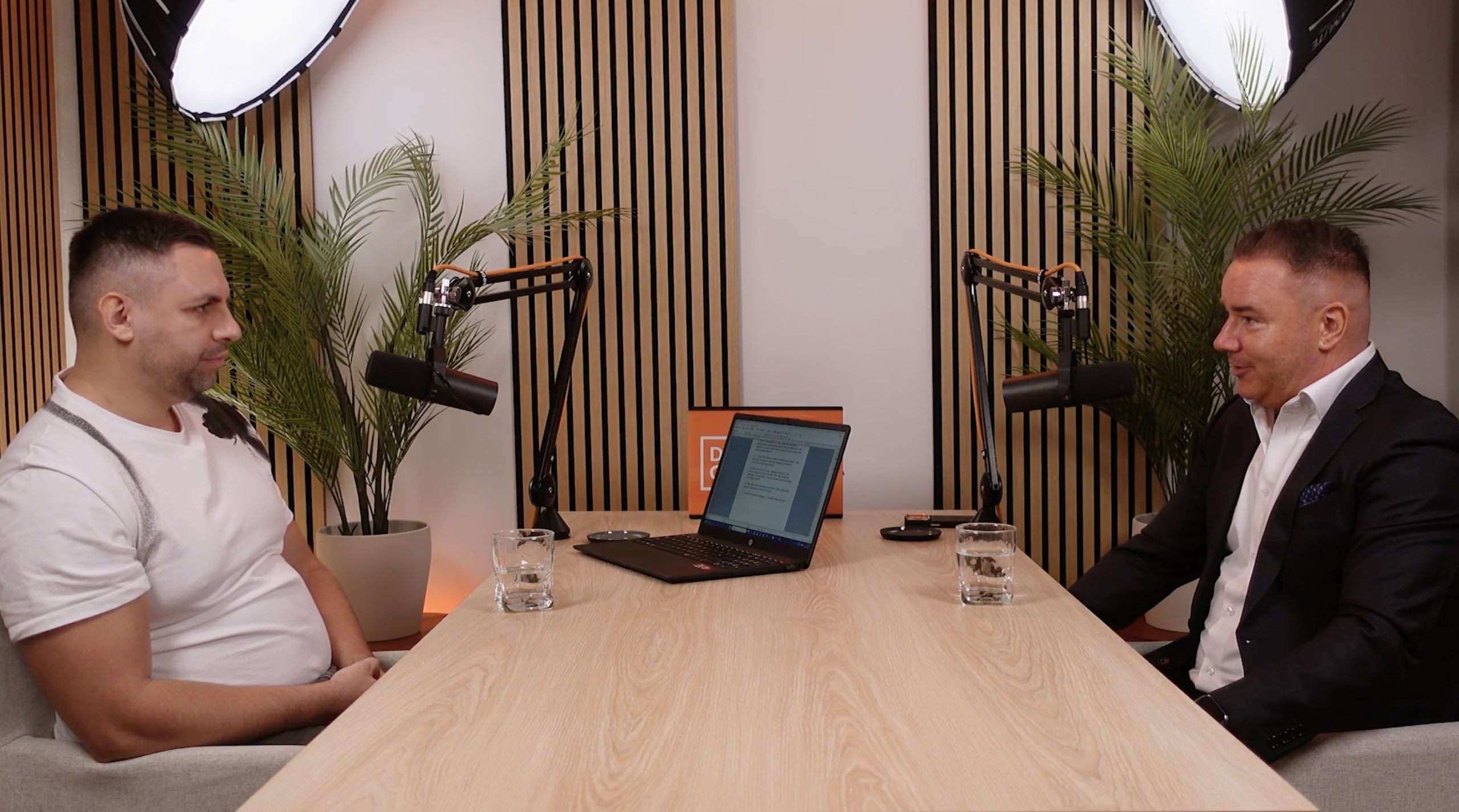
Talking Your Way Into Trust: Why Podcasts Have Become the Quiet Power Tool of Modern Business
There is a particular moment that happens in a good podcast.
It’s usually about ten or fifteen minutes in. The guest has stopped trying to be impressive. The rehearsed anecdotes fall away. What replaces them is something more interesting, clarity. Not the clarity of a slogan, but the clarity of someone explaining what they know because they’ve lived it.
That moment is the reason podcasts work so well for businesses, and why, when done properly, they rarely feel like marketing at all.
In an age of compressed messaging and relentless calls to action, podcasting has emerged as an unlikely counterweight. Long-form. Unhurried. Often inconvenient. And yet, for businesses built on trust, judgement and experience, it has quietly become one of the most effective ways to communicate value.
Not by selling. But by explaining.
The difference between being visible and being understood
Most businesses already talk a lot. Websites, social feeds, presentations, proposals, all full of words, all technically saying something.
What they rarely do is explain.
A podcast creates space for explanation in a way few other formats allow. It lets someone follow a line of thought from beginning to end, including the context, the nuance and the uncertainty that real experience carries with it.
Listeners don’t come away remembering every detail. What they remember is how you made them feel, whether you sounded considered, grounded and credible.
Johann, one of our engineers, notices this shift almost immediately when someone settles into a recording.
“You can hear when someone stops performing and starts thinking out loud. That’s when people lean in.”
It’s a subtle change, but a powerful one, and it’s almost impossible to replicate in shorter, more polished formats.
Expertise reveals itself when you stop trying to demonstrate it
There’s a reason the best interviews don’t feel scripted. The role of a podcast isn’t to present expertise as a list of achievements, but to allow it to surface naturally, through examples, decisions and reflections on what hasn’t worked.
In business, this matters more than we often admit.
Clients are rarely looking for the most confident voice in the room. They’re looking for someone who understands the terrain, the trade-offs, the risks, the blind spots. Someone who has seen enough to speak calmly.
Edward, who works closely with first-time guests, often reassures them before recording.
“You don’t need to have answers ready. Just explain things the way you would if someone genuinely wanted to understand.”
That approach changes everything. It moves the conversation away from performance and towards usefulness, and usefulness is what builds trust.
Why podcasts age better than almost any other content
Unlike social media posts, podcasts are not designed to disappear.
They sit quietly on websites, platforms and playlists, waiting for the right listener to find them. Months later, someone can discover an episode and feel as though they’re hearing it at exactly the right moment.
For businesses, this creates something rare, a growing body of work that deepens rather than dilutes your message.
Over time, a podcast becomes a record of how you think. It shows progression. It captures context. It allows potential clients to spend time with you before ever picking up the phone.
And when they do, the conversation is different.
It starts halfway down the road.
Production is not about polish, it’s about respect
Audiences are remarkably forgiving, but they are not infinitely patient. Poor sound, awkward visuals or technical distractions create friction that has nothing to do with the quality of what’s being said.
Good production doesn’t draw attention to itself. It removes obstacles. It allows the listener to stay with the idea rather than being pulled out of it.
Johann puts it simply.
“If people notice the microphones or the lighting, we haven’t done our job.”
This is where professional environments matter. Not because they impress, but because they create the conditions for better conversations, calmer, more focused, more generous with time.
One conversation, many lives
A podcast episode doesn’t have to exist in isolation. In fact, it probably shouldn’t.
A thoughtful conversation can become written insight, short excerpts, reference material, or something a potential client listens to late at night while deciding who to trust with a problem they haven’t yet fully articulated.
This isn’t about repurposing for the sake of efficiency. It’s about recognising that good thinking deserves more than one outing.
When handled carefully, podcasting becomes less about content creation and more about documentation, capturing what you already know and allowing it to travel.
Not every business needs a podcast, but some really do
Podcasting isn’t for everyone. It requires patience, openness and a willingness to speak in full sentences rather than soundbites.
But for businesses built on judgement, experience and long-term relationships, it offers something increasingly rare, the chance to be understood on your own terms.
No hard sell. No exaggerated claims. Just time, voice and a listener who’s chosen to be there.
That choice makes all the difference.